

When Is a Dental Crown the Best Way to Protect a Tooth?
A tooth can be damaged in many different ways. Sometimes a large cavity removes more healthy structure than expected. In other cases, an old filling begins to fail, a crack develops, or an injury leaves the tooth weaker than it once was.
When there is still enough healthy tooth structure to preserve, a dental crown may offer the protection it needs. A crown covers the visible portion of the tooth, helping restore its strength, appearance, and ability to function comfortably.
Why Teeth Become Weakened
Your teeth are made to withstand a lifetime of daily chewing, but they’re not indestructible. Decay, fractures, and normal wear gradually reduce the amount of strong tooth structure that remains. A tooth may also become vulnerable after a large filling. Although the filling repairs the area affected by decay, the surrounding tooth must still absorb pressure every time you bite and chew. If too much natural structure has been lost, the tooth may eventually crack or break.
When a Filling May Not Be Enough
Some weakened teeth cause sensitivity or discomfort. Others feel completely normal until a piece breaks away. Regular dental examinations allow us to identify these concerns before the damage becomes more extensive. Dental fillings are an effective and conservative way to repair smaller areas of decay or damage. They work best when enough healthy tooth remains to support the restoration.
When a cavity or fracture affects a larger portion of the tooth, replacing the missing structure with another filling may not provide adequate strength. A very large filling can sometimes leave the surrounding walls of the tooth thin and vulnerable to pressure.
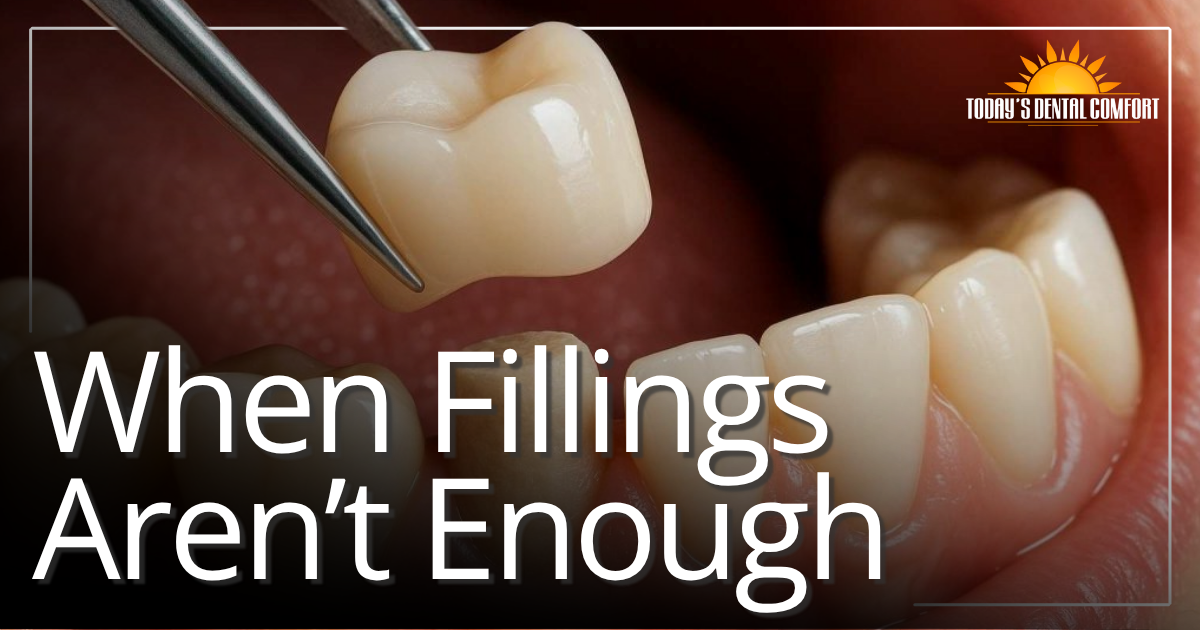
In these situations, a crown may provide a more stable solution. We recommend crowns for several reasons, including protecting fractured teeth and replacing fillings when there is not enough tooth structure remaining to support them.
How a Crown Protects the Tooth
A dental crown acts like a protective cap. Rather than filling only one area, it surrounds the visible part of the tooth and holds the remaining structure together. This added coverage allows biting forces to be distributed more evenly, which can reduce the risk of further cracking. The crown also restores the tooth’s natural shape so it can function comfortably with the rest of your bite.
Crowns can be designed to match the shade of your natural teeth, allowing the restoration to blend into your smile. Once attached, the crown is intended to look and function much like a natural tooth.
What Happens During the Crown Process?
The first step is a careful examination to determine whether the tooth can be restored successfully. If a crown is recommended, the tooth is gently reshaped to create enough room for the restoration.
An impression is then taken and used by a dental laboratory to create the crown. We pay close attention to its size, shape, and color so it fits comfortably and complements the surrounding teeth. Once the finished crown is ready, it is securely attached to the prepared tooth.
Throughout the process, our team will explain what to expect and answer your questions. Our goal is to make treatment feel comfortable and straightforward while creating a restoration that supports your long-term oral health.
Caring for a Restored Tooth
A crowned tooth still needs regular care. The crown itself cannot develop a cavity, but the natural tooth beneath it remains vulnerable to decay, particularly around the edges of the restoration.
Brushing twice a day, flossing carefully around the crown, and maintaining regular professional cleanings can help protect the tooth and surrounding gums. Crowns can generally be cared for in the same way as natural teeth.
It’s also wise to avoid using your teeth to open packages or bite extremely hard objects. If you clench or grind your teeth, a protective appliance may be discussed to reduce unnecessary pressure on both your natural teeth and dental restorations.
Protecting Your Natural Smile
A crown is not recommended simply because a tooth has a filling or a small imperfection. It becomes a valuable option when the remaining tooth needs more support than a filling alone can provide. Addressing a weakened tooth before it breaks may help preserve more natural structure and prevent the need for more complicated care later. Every recommendation should be based on the condition of the tooth, the way your bite functions, and your individual long-term needs.
If you have a damaged tooth, an aging filling, or discomfort when chewing, schedule an appointment at our office located in Burton, MI, or our office located in Fenton, MI. The team at Today’s Dental Comfort will carefully evaluate the tooth and help you understand whether a crown is the right way to protect your smile.