

How Do Dental Sealants Protect Your Child’s Teeth?
October can be a pretty exciting month when you’re a kid. Between fall activities, Halloween parties, and the possibility of a bucket full of candy, there may be a few more sweet treats around than usual. Even children who brush well can have areas of their teeth that are particularly difficult to keep clean. The deep grooves in the back teeth are a perfect example. A toothbrush may glide right over these tiny spaces without completely removing the food and bacteria trapped inside. Dental sealants give those vulnerable areas a little extra help.
Why Are Back Teeth So Easy to Miss?
Take a look at the chewing surface of a molar, and you will notice that it is not perfectly smooth. It has natural pits and grooves that help the tooth grind food. Those same grooves can make cleaning the tooth more challenging.
Food particles and bacteria can settle in spaces that toothbrush bristles can’t reach, especially for a child who is still developing good oral hygiene skills. When plaque remains on the tooth, the bacteria within it produce acids that attack the enamel and contribute to cavities. This is where dental sealants come in.
A Protective Barrier
A dental sealant is a very thin coating that we apply over the chewing surface of a tooth. Once hardened, the sealant creates a barrier between the tooth and the food and bacteria that might otherwise collect in its grooves. In other words, a sealant doesn’t make a tooth cavity-proof. What it does is make one particularly vulnerable part of the tooth less accessible to the things that contribute to decay.
Brushing, flossing, and receiving regular dental care are still important. Sealants are just an additional layer of protection, not a replacement for healthy habits.
Why Do We Recommend Sealants for Children?
Timing can make a difference, especially when it comes to preventive care. When a child’s permanent molars first come in, those teeth have a lot of work ahead of them. Protecting their chewing surfaces before decay can develop is a simple preventive step.
Children can also have a harder time reaching their back teeth effectively when they brush. They may be enthusiastic about brushing independently long before they have completely mastered the technique. Sealants can help protect those hard-to-clean areas while children continue to develop the habits and skills they will use throughout their lives.
What Happens When We Apply a Sealant?
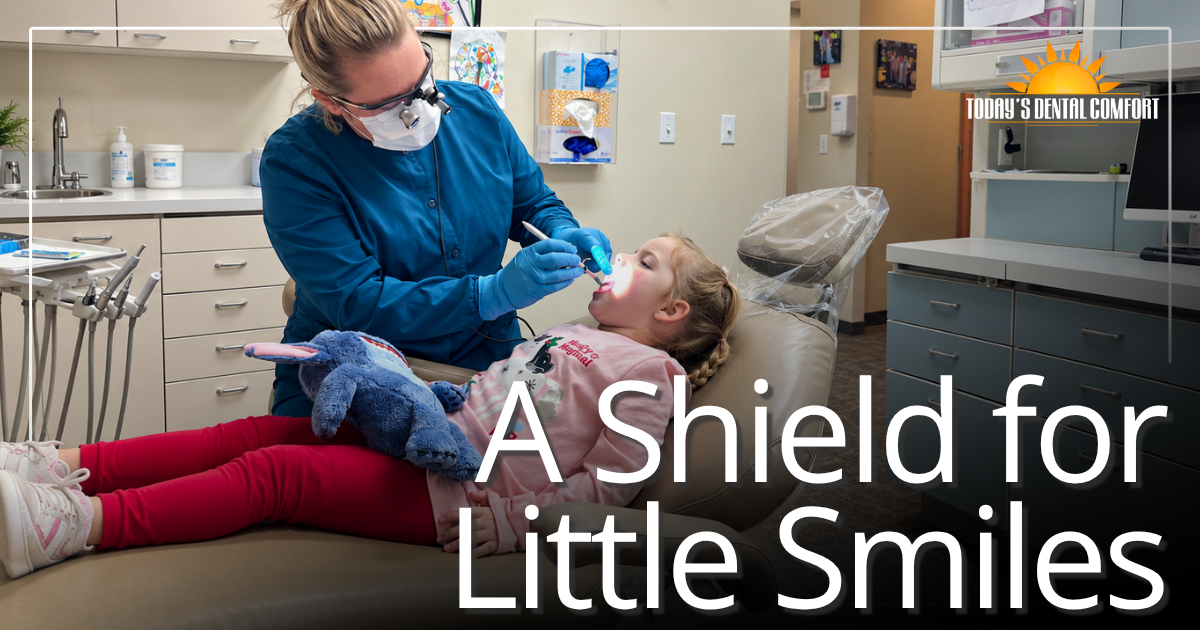
The process is very simple. We begin by cleaning and drying the tooth. The surface is prepared so the sealant can adhere properly, and the thin sealant is then painted into the tooth’s grooves. A special light helps harden it. There is no drilling involved, and the process is quick and painless. Patients can eat and drink immediately afterward.
Sealants can provide protection for years. We also check them at future dental appointments to ensure they have not become worn or chipped.
Small Steps Can Protect a Growing Smile
Childhood is when many of the habits that support lifelong oral health begin to form. Learning to brush well, making thoughtful food choices, and becoming comfortable with regular dental care all contribute to that foundation. Sometimes prevention also means giving certain teeth a little additional protection.
Dental sealants are a small step, but they can help shield the deep grooves of children’s back teeth from food, bacteria, plaque, and the decay they can contribute to. If you’re wondering whether sealants would be helpful for your child, schedule an appointment with Today’s Dental Comfort at our Burton or Fenton, MI office. We can examine your child’s teeth, answer your questions, and help you decide whether sealants make sense for their growing smile.