

These “Harmless” Habits Are Secretly Hard on Your Teeth
Most people know that sugar and poor brushing habits can damage teeth. What surprises many patients is that some habits can also slowly affect tooth enamel, gums, and overall oral health. We often meet patients who take very good care of their smiles but still experience tooth sensitivity, small chips, or gum recession. In many cases, the cause is not neglect. It is simply the result of habits that seem harmless. The good news is that minor adjustments can go a long way in protecting your teeth for the future.
Chewing Ice
Chewing ice is one of the most common habits people do without thinking twice. Since ice does not contain sugar, it may not seem like a problem. However, ice is extremely hard and repeated chewing can place a lot of pressure on teeth. Over time, that pressure may lead to small cracks in enamel or even chipped teeth. Patients with fillings, crowns, or older dental work may be especially vulnerable. Sometimes damage happens suddenly. Other times, it develops gradually and is only noticed later when teeth become sensitive or start to wear down.
Sipping Lemon Water Throughout the Day
Lemon water is associated with hydration and wellness, but prolonged acid exposure weakens tooth enamel. When you sip acidic drinks continuously throughout the day, your teeth do not have much time to recover between exposures. Over time, this contributes to sensitivity, enamel erosion, discoloration, or small chips along the edges of the teeth. This does not mean you have to give up lemon water completely. Drinking it during meals and rinsing with plain water afterward reduces acid exposure.
Sports and Energy Drinks
Sports and energy drinks are marketed as healthy hydration options, but many contain large amounts of acid and sugar. Just like sipping lemon water, the acid in sports and energy drinks, in addition to the sugar, causes damage. Because these beverages are often sipped slowly during workouts or throughout the day, acid remains in contact with teeth for longer periods of time. Rinsing with water afterward may help reduce some of the acid exposure.
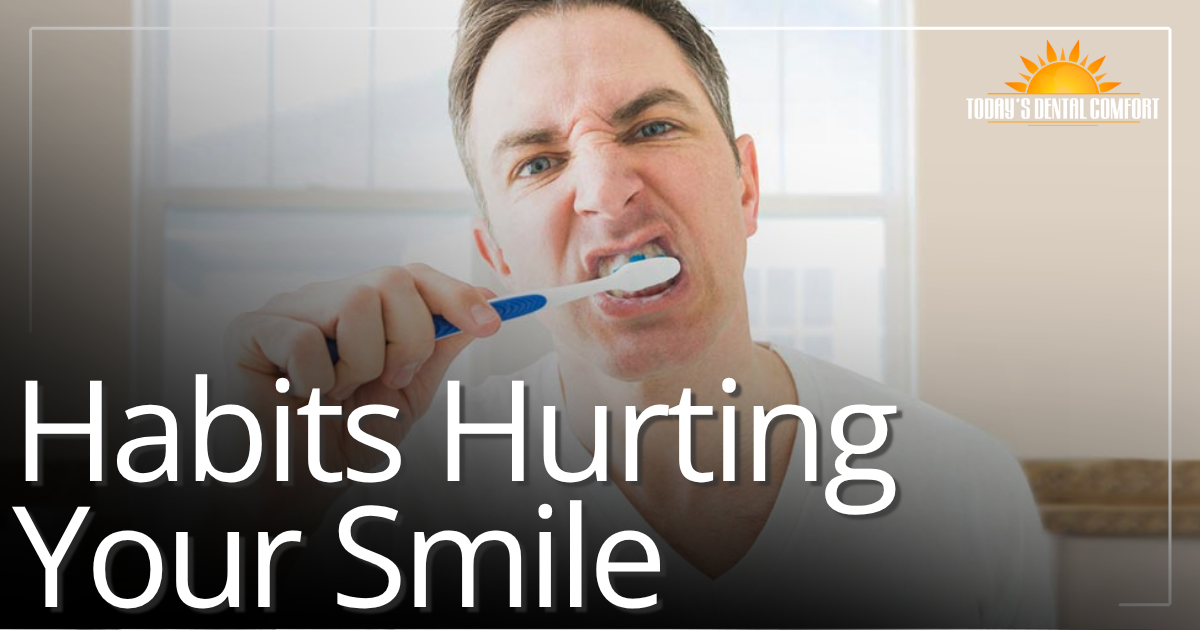
Aggressive Brushing
Many people think brushing harder means brushing better, but aggressive brushing damages teeth and gums over time. Using too much pressure or a hard-bristled toothbrush wears away tooth enamel near the gumline and contributes to gum recession. Patients may eventually notice root sensitivity or small grooves near the base of the teeth. A soft-bristled toothbrush and gentle circular motions are usually the safest and most effective approach.
Using Your Teeth as Tools
It is common for people to use their teeth to open packages, tear tags, hold objects, or bite fingernails. While it may be convenient in the moment, teeth are not meant to bite anything other than food. Unexpected pressure can lead to chipped enamel, cracked teeth, or damage to crowns and fillings. Even small fractures can worsen over time.
Frequent Snacking
Continuous snacking keeps teeth exposed to repeated acid and sugar cycles throughout the day. Every time we eat, bacteria in the mouth produce acids that temporarily soften enamel. When snacking happens constantly, teeth spend more time in an acidic environment without enough recovery time in between. Even foods that seem relatively healthy, such as crackers, granola, dried fruit, or flavored drinks, contribute to enamel wear and cavity risk when consumed frequently throughout the day.
Small Changes Can Help Protect Your Smile
Many dental problems develop slowly. Some habits may not seem important at first, but over time, they can have a major impact on oral health. Simple ways to protect your teeth include:
- Using a soft-bristle toothbrush
- Brushing gently
- Rinsing with water after acidic drinks
- Waiting before brushing after acidic foods
- Avoiding chewing ice
- Wearing a mouthguard during sports
- Limiting frequent snacking
- Avoiding the use of teeth as tools
Preventative care is simpler, more comfortable, and more conservative than repairing damage later.
Protecting Your Smile for the Long Term
Your daily habits play a major role in the long-term health of your smile. Small changes today may help prevent sensitivity, enamel wear, gum recession, and future dental problems down the road. Regular dental exams can also help identify early signs of wear before they become more serious. Understanding how your habits affect your teeth is an important part of protecting your oral health for years to come. If you have any concerns, remember to mention them at your next appointment.
Call today to schedule a consultation at our office located in Burton, MI. We look forward to welcoming you soon.